
Coffee Grind Size Guide: From Espresso to French Press
Match grind size to espresso, pour-over, drip, French press and cold brew, then learn how to adjust by brew time and taste.
Grind size is one of the fastest ways to change how coffee tastes. The same beans and water can produce a sweet, balanced cup or something sour, bitter and uneven simply because the particles are too coarse or too fine for the method.
A grind chart gives you a starting point. The final setting comes from observing brew time, flow and flavor in your own equipment.
Why grind size matters
Grinding creates surface area for water to dissolve flavor compounds. Fine particles expose more surface and generally extract faster. Coarse particles expose less and extract more slowly.
Grind also controls resistance. In espresso and pour-over, very fine coffee can slow the water dramatically; very coarse coffee can let it pass too quickly. In immersion methods, contact time becomes the stronger lever, but particle size still affects flavor and sediment.
Coffee grind size chart
Extra fine: Turkish-style coffee.
Fine: espresso; texture similar to fine table salt.
Medium-fine: moka pot and some small pour-over brewers.
Medium: most pour-over and automatic drip brewers.
Medium-coarse: larger pour-overs and some immersion recipes.
Coarse: French press and cold brew.
These descriptions are relative. Grinder models use different numbers, and even two units of the same model can vary. Learn the visual range, then dial in by result.
Best grind size by brewing method
Espresso: fine
Espresso has a short contact time and pressure pushing water through a compact coffee bed. A fine grind creates enough resistance and surface area to extract quickly. The National Coffee Association’s espresso guide explains why a method measured in seconds needs a fine grind.
If the shot runs very fast and tastes sharp or thin, grind finer. If it barely flows and tastes dry or harsh, grind coarser. Make small changes; espresso responds quickly.
Pour-over: medium
Start at medium, similar to sand, and adapt to the dripper, dose and filter. The NCA recommends a medium starting point in its pour-over brewing guide.
A fast drawdown and sour cup usually point toward a finer setting. A slow drawdown with bitterness or astringency often calls for a coarser setting, assuming the pouring technique is consistent.
Automatic drip: medium
Most flat-bottom and cone-filter machines work near medium. A large batch often benefits from a slightly coarser setting than a small batch because the deeper coffee bed slows flow. See the NCA’s drip coffee guidance.
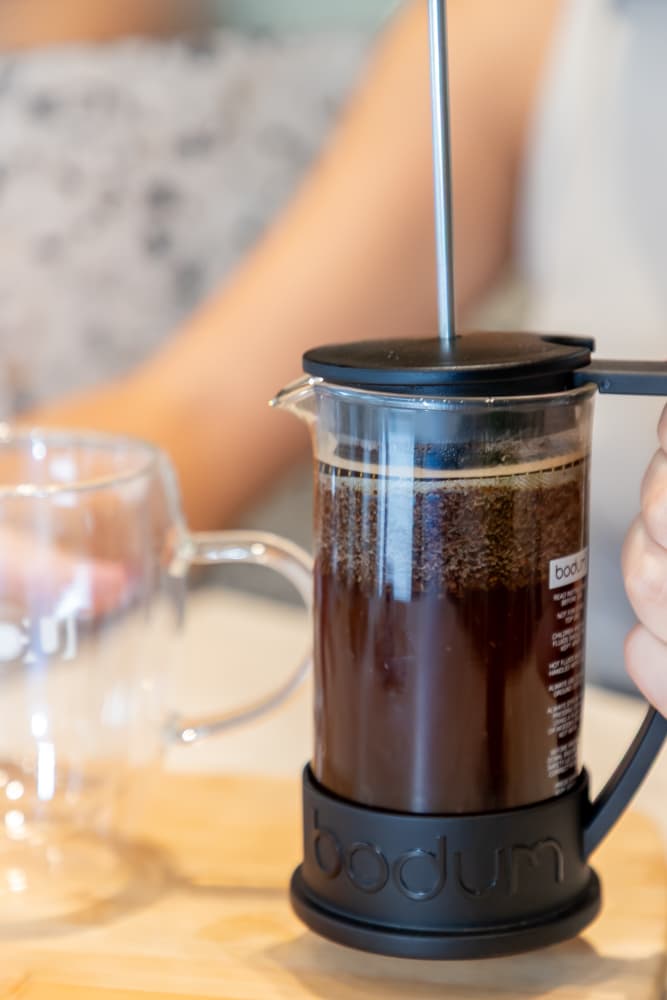
French press: coarse
French press uses several minutes of immersion and a metal mesh, so coarse particles help control extraction and reduce fine sediment. Start coarse, then move slightly finer if the cup is weak even after the ratio and steep time are correct.
Compare texture, equipment and technique in our guide to French press vs pour-over.
Cold brew: coarse
Cold brew extracts for hours, making a coarse grind a sensible starting point. Fine coffee may produce excessive sediment and a muddy concentrate. The NCA also recommends beginning coarse in its cold brew guide.
Before choosing the grind, decide whether you are making a concentrate or a ready-to-drink recipe. Our comparison of cold brew vs iced coffee explains the methods.
How taste tells you what to change
Sour, sharp or hollow
The coffee may be under-extracted. If dose, water and technique are consistent, grind finer to help water dissolve more from each particle. Do not confuse pleasant fruit acidity with an unfinished, sharply sour cup.
Bitter, dry or astringent
The coffee may be over-extracted or flowing unevenly. Grind coarser, shorten contact time or improve distribution. A bitter roast profile can also be part of the coffee itself, so change one variable at a time.
Weak but bitter
This combination often signals uneven extraction rather than a simple ratio problem. Very fine particles may clog part of the bed while water channels through another part. Improve grind consistency and pouring before adding more coffee.
Why a burr grinder helps
A burr grinder crushes coffee between two surfaces and generally produces a narrower range of particle sizes than a blade grinder. Fewer extreme fines and boulders make extraction more even and adjustments easier to repeat.
If a blade grinder is the only option, use short pulses, shake gently between pulses and prepare immediately. The result will be less uniform, but a consistent routine still helps.
A simple dialing-in workflow
Choose the starting range for the brewer.
Use a consistent coffee-to-water ratio.
Keep water temperature and pouring technique stable.
Record grind setting, total brew time and taste.
Change the grind one small step and brew again.
Pair this process with our coffee-to-water ratio guide. Fresh beans also make the feedback clearer, so review how to store coffee and explore current options in the GROU shop.
The correct grind is not a universal number. It is the setting that gives your brewer an even flow and makes that specific coffee taste sweet, clear and balanced.
Frequently asked questions
- What grind size should I use for each brewing method?
- Espresso needs a fine grind, pour over and automatic drip sit around medium, and French press and cold brew work best coarse. Turkish style coffee goes extra fine, while a moka pot lands medium-fine. Treat those as starting points rather than exact numbers: grinder models use different scales, and even two units of the same model can vary, so learn the visual range and then adjust by taste.
- Why does my coffee taste sour?
- Sour, sharp or hollow coffee is usually under-extracted, so grind finer. The water has not dissolved enough from each particle, often because the grind is too coarse for the method or the contact time is too short. Keep the dose, water and technique the same, move the grind one small step finer, then taste again. Pleasant fruit acidity is a different thing from an unfinished, sharply sour cup.
- What should I do if my coffee tastes bitter?
- Grind coarser, shorten the contact time, or improve how the water is distributed over the coffee bed. Bitter, dry or astringent coffee usually means it was over-extracted or the water flowed unevenly. A bitter roast profile can also come from the beans themselves, so change one variable at a time. Coffee that tastes weak and bitter at once points to uneven extraction rather than the ratio.
- Is a burr grinder better than a blade grinder?
- A burr grinder gives more even results. It crushes coffee between two surfaces and usually produces a narrower range of particle sizes, so there are fewer extreme fines and boulders, extraction is more even, and adjustments are easier to repeat. A blade grinder can still work: use short pulses, shake gently between pulses and brew right away. The cup will be less uniform, but a consistent routine helps.
- What grind size is best for cold brew and French press?
- Coarse for both. Cold brew extracts for hours, so a coarse grind keeps the concentrate from turning muddy and full of sediment. French press uses several minutes of immersion and a metal mesh filter, where coarse particles help control extraction and reduce the fine sediment in the cup. If a French press tastes weak once the ratio and steep time are right, move slightly finer.
- What is a medium-fine coffee grind and when do you use it?
- A medium-fine grind sits between the fine grind used for espresso and the medium grind used for drip coffee. It feels a little finer than sand and a little coarser than table salt. It is the usual starting point for a moka pot, small cone-shaped pour-over brewers and many AeroPress recipes. Grinder numbers vary by model, so adjust by taste: if the cup is sour or thin, go one step finer; if it is bitter or the water drains slowly, go one step coarser.
- Where can I drink specialty coffee in Coral Gables?
- GROU Coffee + Cowork is a specialty coffee shop, all day brunch kitchen and coworking space at 4100 Salzedo St STE 5, Coral Gables, FL 33146, rated 4.8 from more than 1,000 Google reviews. The coffee menu includes espresso, americano, cappuccino, latte, flat white, cortado, cold brew and matcha latte. Open Monday to Friday from 7:30 AM to 6 PM, and Saturday and Sunday from 8:30 AM to 3 PM. Phone: +1 (305) 639-8218.
Visit us
GROU Coffee + Cowork
- Mon-Fri 7:30 AM - 6 PM Sat-Sun 8:30 AM - 3 PM
- 2 hours free parking Walk in, no reservations
Keep reading
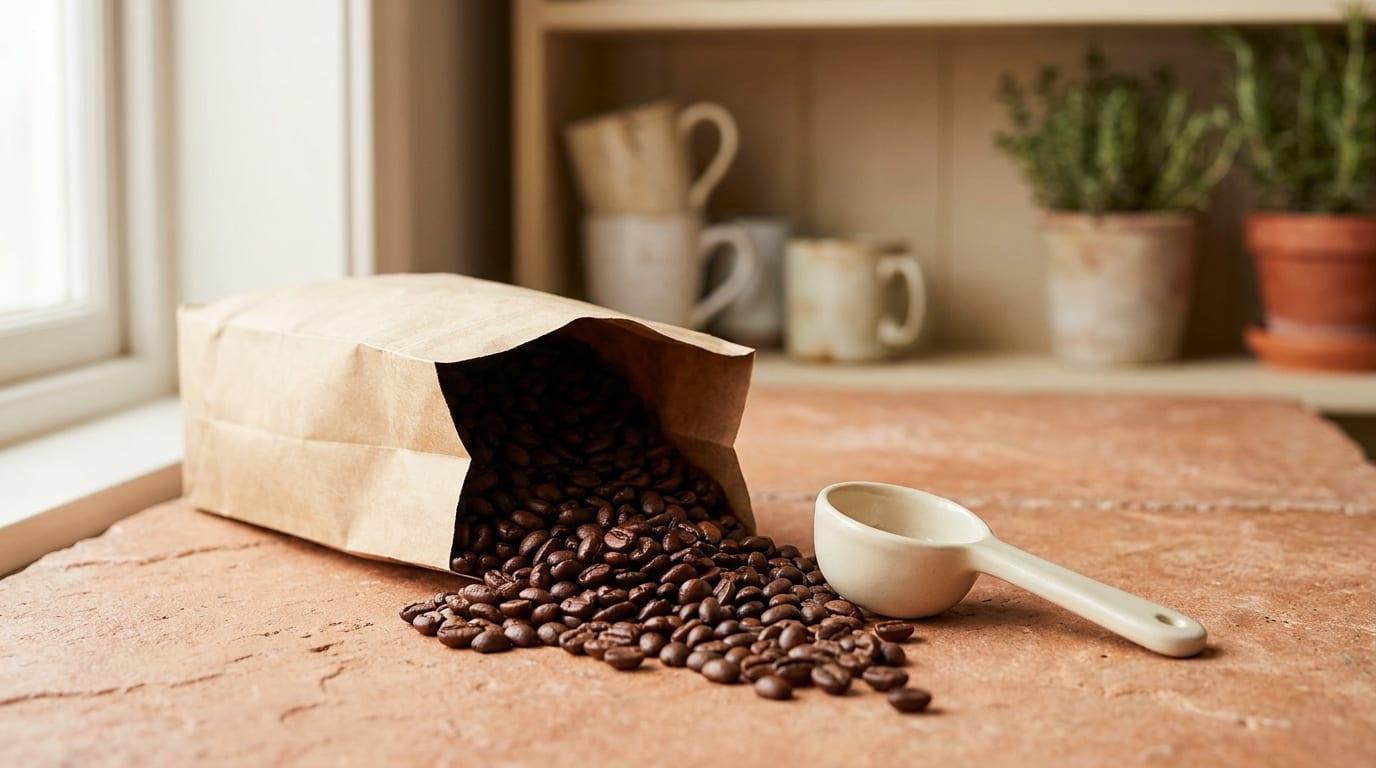
How to Know If Your Coffee Is Expired (And Why Roast Date Matters More)
Discover how to know if your coffee is expired and why the roast date matters more than the expiration date for freshness and flavor.
What Is a Cortadito? Miami's Coffee, Explained
A cortadito is Cuban espresso cut with steamed milk and sweetened as it brews. The sugar is the part everyone gets wrong.
What Is a Chagaccino? The Chaga Coffee Drink, Explained
A chagaccino is a cappuccino made with chaga, a fungus that grows on birch trees, blended with cocoa and cinnamon. Here is what it tastes like, how much caffeine it has, and what nobody can honestly claim about it.