
What Is a Chagaccino? The Chaga Coffee Drink, Explained
A chagaccino is a cappuccino made with chaga, a fungus that grows on birch trees, blended with cocoa and cinnamon. Here is what it tastes like, how much caffeine it has, and what nobody can honestly claim about it.
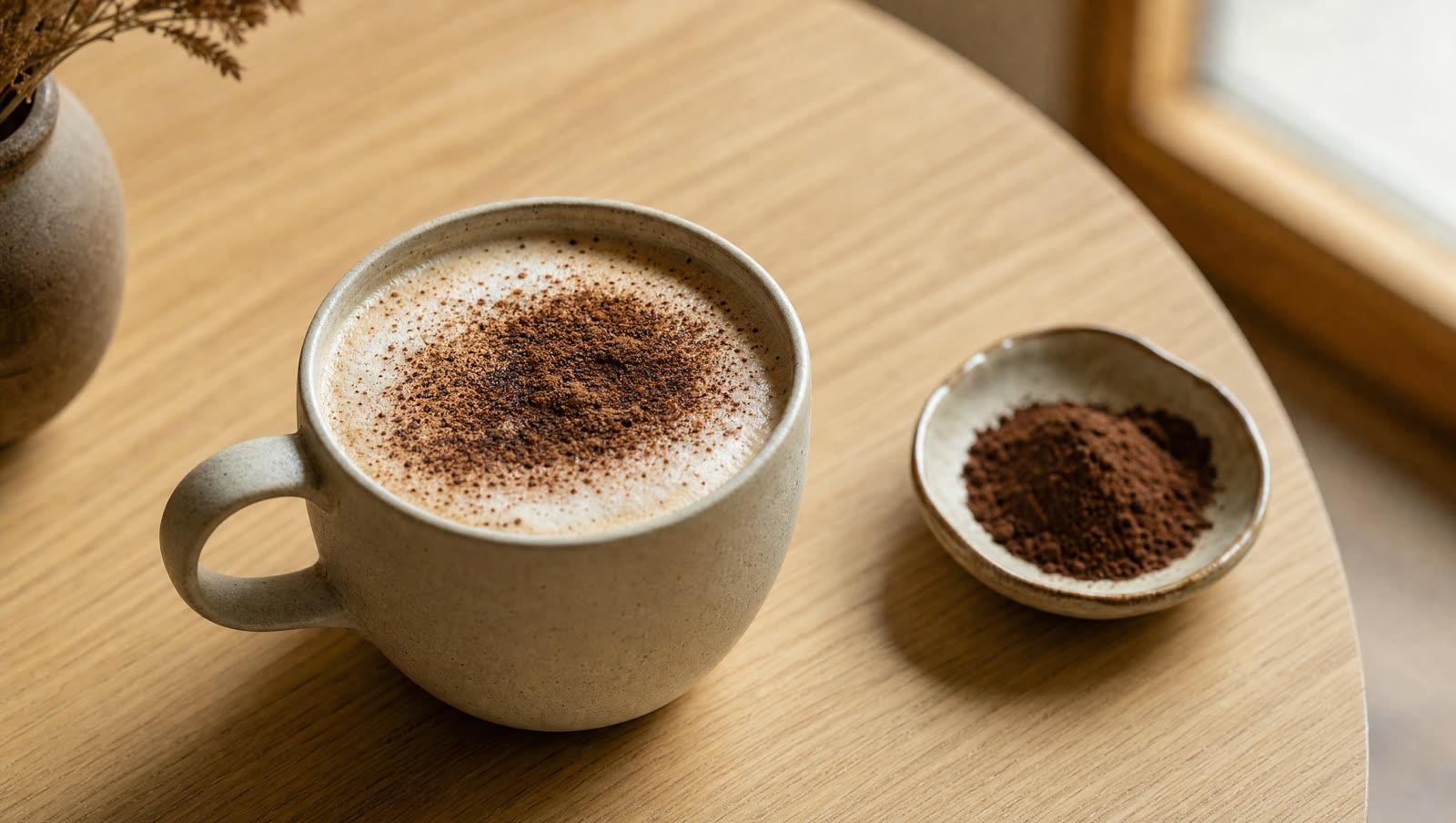
A chagaccino is a cappuccino made with chaga, a fungus that grows on birch trees in cold northern forests. The chaga reaches the bar as a fine dark powder, almost always already blended with cocoa and cinnamon, and it gets whisked and steamed into milk the same way a mocha is. What lands in front of you looks like any other cappuccino, tastes closer to a mild hot chocolate with a woody edge than to anything mushroomy, and carries only the caffeine that comes from the espresso, because chaga has none of its own.
The name is a portmanteau, chaga plus cappuccino, and it jumped from wellness shops to regular coffee menus fast. That speed is exactly why the drink deserves a careful explanation, because a lot of what gets said about chaga online runs well ahead of the evidence. So here is what chaga actually is, what the drink tastes like, and where the honest line sits between an interesting ingredient and a medicine.
What is chaga?
Chaga is the common name for Inonotus obliquus, a fungus that lives on birch trees across Siberia, Northern Europe, Canada and the northern United States. It looks nothing like the mushrooms in the produce aisle. There is no cap and no stem. What people harvest is a hard black mass on the side of a trunk, cracked and charred on the outside, rusty orange on the inside, closer to burnt wood than to a portobello.
That mass is technically a sclerotium: a dense knot of fungal tissue the organism builds while it feeds on the living tree. It takes years to reach a usable size, and it takes those years from the birch, which is why sustainable harvesting is a genuine conversation among foragers and not just a line on a label.
Because it is woody and hard, nobody eats chaga the way you eat a mushroom. It gets chopped, dried and extracted, usually in hot water, sometimes in alcohol, sometimes both, then dried again into the powder that ends up in a tin on a cafe shelf. People in northern regions have brewed it as a tea for generations, long before anyone thought to steam it into milk and put it on a menu board.
What does a chagaccino taste like?
Chaga on its own is earthy and mildly bitter, with a woody, almost tea-like character and a faint sweet note that people often describe as vanilla. It is not savory. It does not taste like broth and it does not taste like a portobello, which is the fear most people bring to their first cup.
Nearly every chagaccino blend leans on cocoa and cinnamon to round that off, so the finished drink reads as a gentle mocha with a drier, darker finish. The powder dissolves well when it is whisked with a splash of hot liquid first, and it gives the milk a little extra body, so the texture sits somewhere between a cappuccino and a hot chocolate.
If you already like drinks on the earthy end of the spectrum, this one will land easily. It is a similar kind of pleasure to a good matcha latte, approached from the opposite direction: where matcha is green, grassy and bright, chaga is dark, dry and grounded.
Does a chagaccino have caffeine?
Chaga contains no caffeine. Any caffeine in a chagaccino comes from the espresso, so a standard one built on a single shot has roughly the caffeine of a single shot, and a version made without espresso has essentially none. That is the whole calculation.
This is worth saying plainly, because the phrase "mushroom coffee" gets used for two very different things: blends where mushroom powder is stirred into actual coffee, and blends that replace coffee entirely. Only the first one has caffeine in it. It is the same confusion people run into with decaf, where the honest answer is that decaf is low in caffeine rather than free of it.
In practice that makes chaga a flexible ingredient. With the shot, you get an afternoon coffee with a different personality. Without it, you are ordering something else, and the version most cafes build for that is the caffeine-free golden milk chaga latte, which you can drink at 8 PM and still sleep.
What does chaga actually do?
Here is the careful part. Chaga is genuinely rich in antioxidant compounds, including polyphenols and the melanin that gives it that black exterior, and it contains beta-glucans, a family of fibers found across many mushrooms. Those are facts about its chemistry, and they are not in dispute.
What those compounds do inside a person drinking a latte is a much narrower story. Most chaga research so far has been done in test tubes and in animals. Human trials are few and small. No health authority has approved chaga to treat, prevent or cure anything, and any page telling you it cures a disease, burns fat or cleans out your system is selling you something rather than telling you something.
It gets marketed as an adaptogen and as a superfood, and it is worth knowing that neither word carries a legal or scientific definition. Both are marketing categories. That does not make chaga worthless. It makes it an interesting traditional ingredient with early research behind it, which is a fair sentence and a much less exciting one than what appears on most labels.
The reasonable reason to order a chagaccino is the one nobody prints: it tastes good, it is warm, and it turns a routine afternoon espresso into something with a little more going on.
Is chaga safe? Who should ask a doctor first?
For most healthy adults, chaga in the amount used in a cafe drink is generally well tolerated. There are real exceptions worth knowing, and none of them are scare tactics.
- Kidney concerns. Chaga is high in oxalates, the same compounds involved in the most common type of kidney stone. If you have kidney disease or a history of stones, talk to your doctor before drinking it regularly.
- Blood thinners. Chaga may affect clotting, so it matters if you take anticoagulants or have surgery scheduled.
- Diabetes medication. Chaga has been studied for effects on blood sugar, so anyone managing blood sugar with medication should check before adding it every day.
- Pregnancy and breastfeeding. There is not enough data to call it safe, which is a reason to skip it rather than evidence of harm.
- Autoimmune conditions and immunosuppressants. Because chaga is studied for effects on immune signaling, it is worth raising with whoever manages your treatment.
None of that is a warning about one cup at a coffee shop. It is about the difference between a drink you enjoy now and then and a supplement you take daily, and that second decision belongs with your doctor, not with a coffee blog.
Chagaccino vs chaga latte: what is the difference?
Cafes use both names loosely, but the practical split is simple. A chagaccino is built like a cappuccino: espresso, the chaga blend, steamed milk and foam. It has coffee in it. A chaga latte skips the espresso and builds flavor another way, which is why the most common version is a golden milk style drink where chaga meets turmeric, ginger and warming spices.
That second style is the one to order at night, or when you have already hit your coffee ceiling for the day. We covered it separately in our guide to the golden milk chaga latte, including how the turmeric changes both the color and the flavor of the cup.
How do you make a chagaccino at home?
You need chaga in a form that dissolves. Whole dried chunks are for simmering into tea, not for lattes, so what you want is an extract powder or a ready made chagaccino blend that already carries the cocoa and the cinnamon.
From there it is a mocha routine:
- Whisk the powder into a small amount of hot water or hot milk first, until there are no clumps. Skipping this step is the single most common reason a homemade one tastes gritty.
- Use the amount the package calls for. Extract strengths vary a lot between brands, so the tin is a better guide than any recipe you find online.
- Pull your espresso, or leave it out entirely for the caffeine-free version.
- Steam the milk. Any milk works, though oat tends to hold onto the cocoa notes nicely.
- Combine, then dust the top with cinnamon or cocoa.
One honest warning about doing this at home: chaga extract is not cheap, and quality varies enormously between brands. If you are just curious about the flavor, ordering one at a coffee shop is a much smaller commitment than a tin you may end up using twice.
Where to try a chagaccino in Coral Gables
GROU Coffee + Cowork keeps both versions on the menu: the Chagaccino for when you want the espresso in it, and the Golden Milk Chaga Latte for when you do not. It is a specialty coffee shop with an all-day brunch kitchen and a cowork space, at 4100 Salzedo St STE 5, Coral Gables, FL 33146, rated 4.8 on Google across 1,095 reviews.
Hours are 7:30 AM to 6 PM Monday through Friday, and 8:30 AM to 3 PM on Saturday and Sunday, so the Chagaccino works as the morning drink and the Golden Milk Chaga Latte as the four o'clock one that will not follow you to bed. You can call ahead at +1 (305) 639-8218.
Frequently asked questions
- What is a chagaccino?
- A chagaccino is a cappuccino made with chaga, a fungus that grows on birch trees in cold northern forests. The chaga is used as a fine extract powder, usually pre-blended with cocoa and cinnamon, and it is whisked and steamed into milk along with a shot of espresso. The result tastes like a mild mocha with a woody, slightly bitter finish rather than anything savory or mushroom-like.
- Does a chagaccino have caffeine?
- Chaga itself contains no caffeine, so all the caffeine in a chagaccino comes from the espresso. A version built on a single shot carries roughly the caffeine of a single shot, and a version made without espresso has essentially none. That is why the caffeine-free option is usually sold as a chaga latte or a golden milk chaga latte instead of a chagaccino.
- What does chaga taste like?
- On its own, chaga is earthy and mildly bitter, with a woody, almost tea-like character and a faint sweet note many people compare to vanilla. It is not savory and it does not taste like a cooking mushroom. In a cafe drink it is almost always blended with cocoa and cinnamon, which softens the bitterness and pushes the flavor toward a dry, dark hot chocolate.
- Is it safe to drink chaga every day?
- For most healthy adults the amount in a cafe drink is generally well tolerated, but daily use is a different question. Chaga is high in oxalates, which matters for anyone with kidney disease or a history of kidney stones, and it may interact with blood thinners and diabetes medication. There is not enough data for pregnancy or breastfeeding. Ask your doctor before making it a daily habit.
- Where can you order a chagaccino in Coral Gables?
- GROU Coffee + Cowork has both a Chagaccino and a Golden Milk Chaga Latte on the menu at 4100 Salzedo St STE 5, Coral Gables, FL 33146, phone +1 (305) 639-8218. It is a specialty coffee shop with an all-day brunch kitchen and a cowork space, rated 4.8 on Google across 1,095 reviews. Hours are 7:30 AM to 6 PM Monday through Friday and 8:30 AM to 3 PM on weekends.
Keep reading
The Best Coffee Shops in Wynwood, According to the Data
Twelve coffee shops in and around Wynwood, with the addresses, hours, Google ratings and price levels pulled straight from each listing. No invented opinions, just what you need to pick one and go.
What Are Tequeños? The Venezuelan Cheese Stick Miami Eats for Breakfast
A tequeño is a strip of wheat dough wrapped around salty white cheese and fried. Where the Venezuelan classic comes from, what cheese belongs inside, and why Miami eats it in the morning.
What Is a Vietnamese Latte? Coffee, Condensed Milk and Why It Works
Strong dark coffee plus sweetened condensed milk: what a Vietnamese latte actually is, why the condensed milk changes everything, and how it compares to a regular latte.