
Coffee-to-Water Ratio: A Barista Guide for Every Brewing Method
A practical guide to measuring coffee and water for pour-over, drip, French press, cold brew and espresso, then adjusting the recipe to your taste.
A better cup often begins with one simple number: the coffee-to-water ratio. It tells you how many grams of water to use for every gram of coffee, making your recipe repeatable instead of leaving it to guesswork.
At GROU, we think of a ratio as a starting point, not a rigid rule. Coffee origin, roast, grind size, brewing method and personal taste all matter. Once you have a reliable baseline, small changes become easier to understand, and easier to enjoy.
The short answer
For most filter coffee, begin between 1:15 and 1:17. That means 15 to 17 grams of water for every gram of coffee. A balanced everyday recipe is 1:16: use 20 grams of coffee with 320 grams of water.
The Specialty Coffee Association discusses a reference near 60 grams per liter, about 1:16.7, in its explanation of water, coffee and extraction. Treat that as a useful center point and adjust from there.
Practical ratios by brewing method
Pour-over: 1:15 to 1:17. Try 20 g coffee and 320 g water.
Automatic drip: 1:15 to 1:17. Try 30 g coffee and 500 g water.
French press: 1:14 to 1:16. Try 30 g coffee and 450 g water.
Ready-to-drink cold brew: 1:10 to 1:14, depending on steep time and desired intensity.
Cold brew concentrate: 1:4 to 1:8, then dilute with water or milk to taste.
Espresso: baristas usually compare dry coffee to the beverage in the cup. A 1:2 starting point means 18 g of coffee producing about 36 g of espresso.
These ranges are not interchangeable formulas. Immersion methods, percolation and espresso move water through coffee differently, so each needs its own grind, time and technique.
Why grams work better than scoops
A tablespoon of coffee can change in weight depending on bean size, roast and grind. Water volume can also be misleading because “one cup” may mean different things on different brewers. A small digital scale measures both ingredients with the same unit and gives you a recipe you can reproduce tomorrow.
No scale yet? Use your usual scoop consistently, record the water level and change only one variable at a time. The result will be less exact, but still more useful than changing everything at once.
How to adjust a coffee recipe
If the cup tastes weak or watery
Use slightly more coffee, reduce the water, or grind a little finer. Change one thing, brew again and taste. Weakness can come from too little coffee, but it can also come from water passing through too quickly.
If the cup tastes harsh or overly bitter
Use slightly less coffee, add a little more water, or grind a little coarser. Very hot water or excessive brew time can also push extraction too far.
If it tastes sharp or sour
The coffee may be under-extracted. A finer grind, longer contact time or better saturation can help. Before changing the ratio dramatically, check that all grounds are getting evenly wet.
A simple home workflow
Choose a method and start with its middle ratio.
Weigh the dry coffee, then calculate the water.
Keep water temperature, grind and time consistent.
Taste once the cup cools slightly; sweetness and acidity become easier to read.
Change only one variable for the next brew and write it down.
Fresh beans make those adjustments worthwhile. Explore the coffee available in the GROU shop, then protect it with our guide on how to store coffee beans. If you are deciding between immersion and a paper filter, compare French press and pour-over.
What about drinks made with milk?
The brew ratio determines the espresso base; milk changes the finished drink. A latte, cappuccino and flat white can begin with the same espresso but feel very different because of milk quantity and texture. Our guide to flat white vs latte vs cappuccino explains the difference, or you can taste the drinks on the GROU menu.
The ratio to remember
Start filter coffee at 1:16, measure by weight and adjust in small steps. The best ratio is the one that makes a specific coffee taste clear, sweet and balanced in your brewer.
Frequently asked questions
- What is the best coffee to water ratio?
- For most filter coffee, start between 1:15 and 1:17, which means 15 to 17 grams of water for every gram of coffee. A balanced everyday recipe is 1:16, so 20 grams of coffee with 320 grams of water. The Specialty Coffee Association discusses a reference near 60 grams per liter, about 1:16.7, in its explanation of water, coffee and extraction. Treat that as a center point and adjust from there.
- How much coffee do I use for a French press?
- For a French press, use a ratio between 1:14 and 1:16, for example 30 grams of coffee with 450 grams of water. That range is a little stronger than the 1:15 to 1:17 used for pour over and automatic drip. Immersion, percolation and espresso all move water through coffee differently, so these ranges are not interchangeable formulas, and each method needs its own grind, time and technique.
- Why does my coffee taste weak and watery?
- Weak, watery coffee can come from too little coffee, but it can also come from water passing through the grounds too quickly. Use slightly more coffee, reduce the water, or grind a little finer, then brew again and taste. Change only one thing at a time so you know what worked. If the cup tastes harsh or overly bitter instead, go the other way: less coffee, a little more water, or a coarser grind.
- Do I really need a scale to make coffee at home?
- A small digital scale makes your recipe repeatable, because a tablespoon of coffee changes weight depending on bean size, roast and grind. Water volume can mislead you too, since one cup means different things on different brewers. Measuring both ingredients in the same unit gives you a recipe you can reproduce tomorrow. Without a scale, use your usual scoop consistently, record the water level and change only one variable at a time.
- What ratio should I use for cold brew?
- Cold brew that is ready to drink works between 1:10 and 1:14, depending on steep time and how intense you want it. For a concentrate, use 1:4 to 1:8, then dilute with water or milk to taste. Espresso is measured differently, because baristas compare the dry coffee to the drink in the cup: a 1:2 starting point means 18 grams of coffee producing about 36 grams of espresso.
- Does the coffee to water ratio matter for a latte or cappuccino?
- The brew ratio determines the espresso base, and the milk changes the finished drink. A latte, a cappuccino and a flat white can start from the same espresso and still feel very different because of milk quantity and texture, so dialing in the espresso still matters. If you would rather taste the difference than measure it, GROU Coffee in Coral Gables serves Latte, Cappuccino and Flat White at 4100 Salzedo St STE 5.
Visit us
GROU Coffee + Cowork
- Mon-Fri 7:30 AM - 6 PM Sat-Sun 8:30 AM - 3 PM
- 2 hours free parking Walk in, no reservations
Keep reading
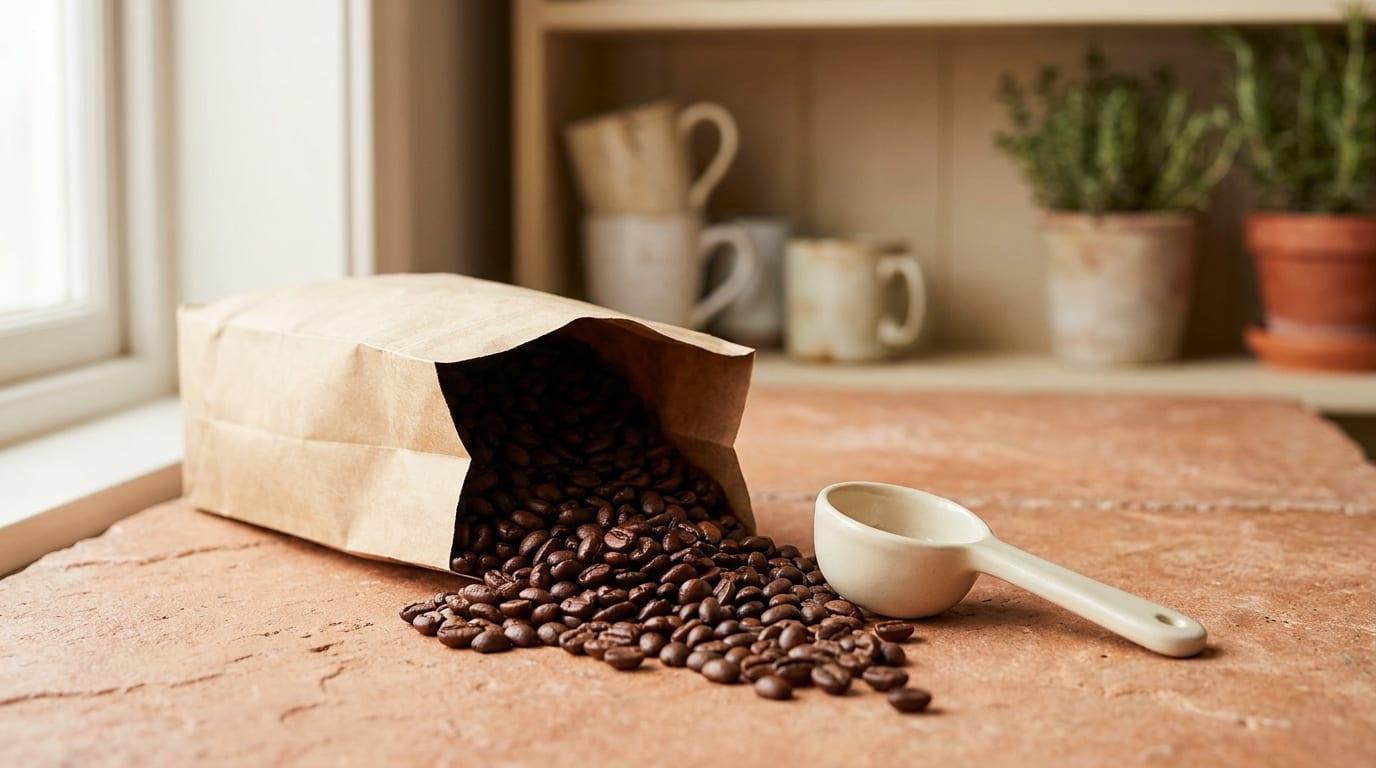
How to Know If Your Coffee Is Expired (And Why Roast Date Matters More)
Discover how to know if your coffee is expired and why the roast date matters more than the expiration date for freshness and flavor.
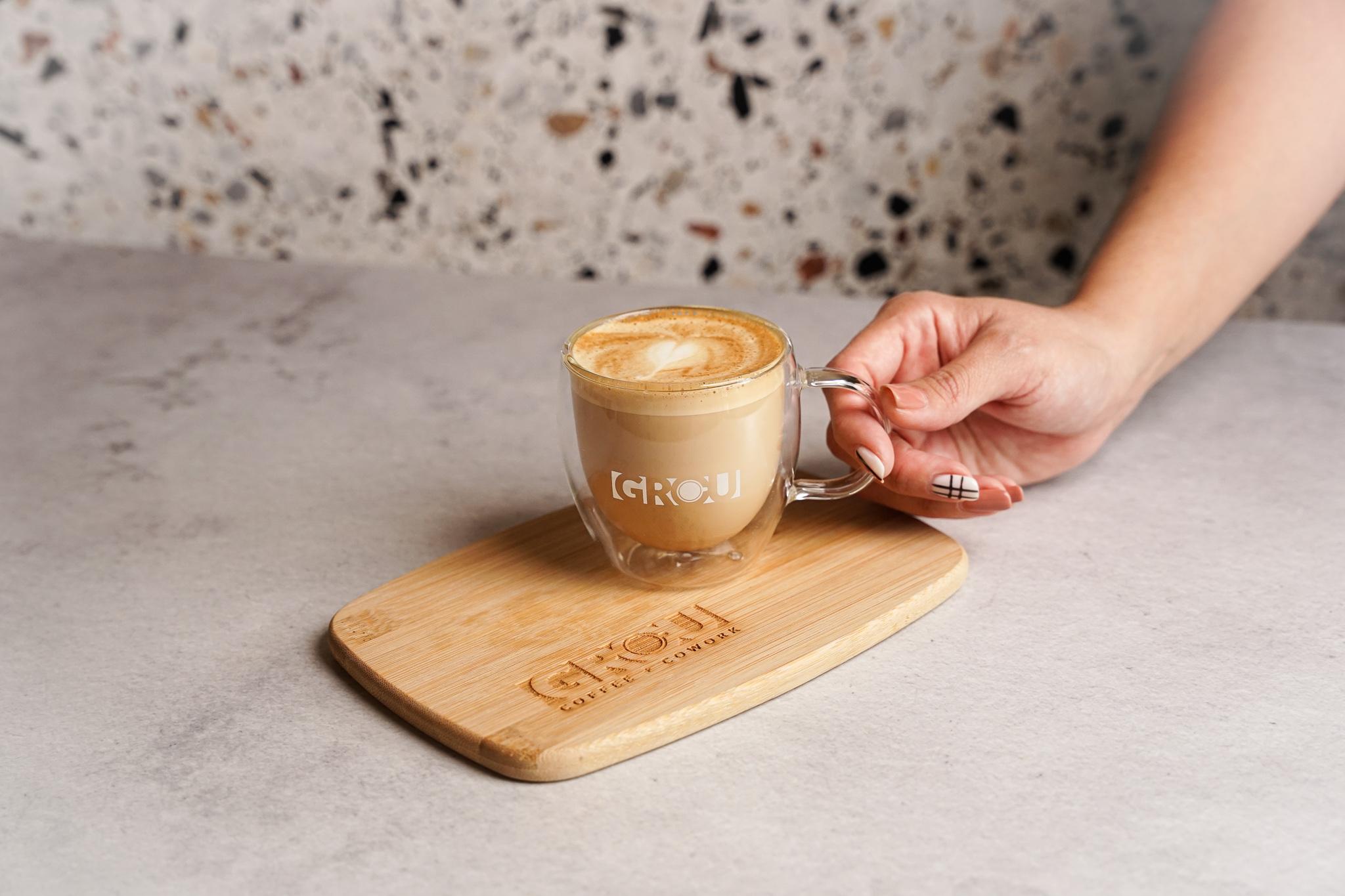
What Is a Cortadito? Miami's Coffee, Explained
A cortadito is Cuban espresso cut with steamed milk and sweetened as it brews. The sugar is the part everyone gets wrong.
What Is a Chagaccino? The Chaga Coffee Drink, Explained
A chagaccino is a cappuccino made with chaga, a fungus that grows on birch trees, blended with cocoa and cinnamon. Here is what it tastes like, how much caffeine it has, and what nobody can honestly claim about it.