
What Is an Açaí Bowl? The Honest Answer
Frozen Amazonian fruit pulp, blended thick and buried under granola. Here is what an açaí bowl actually is, where it came from, and the honest answer on whether it is healthy.
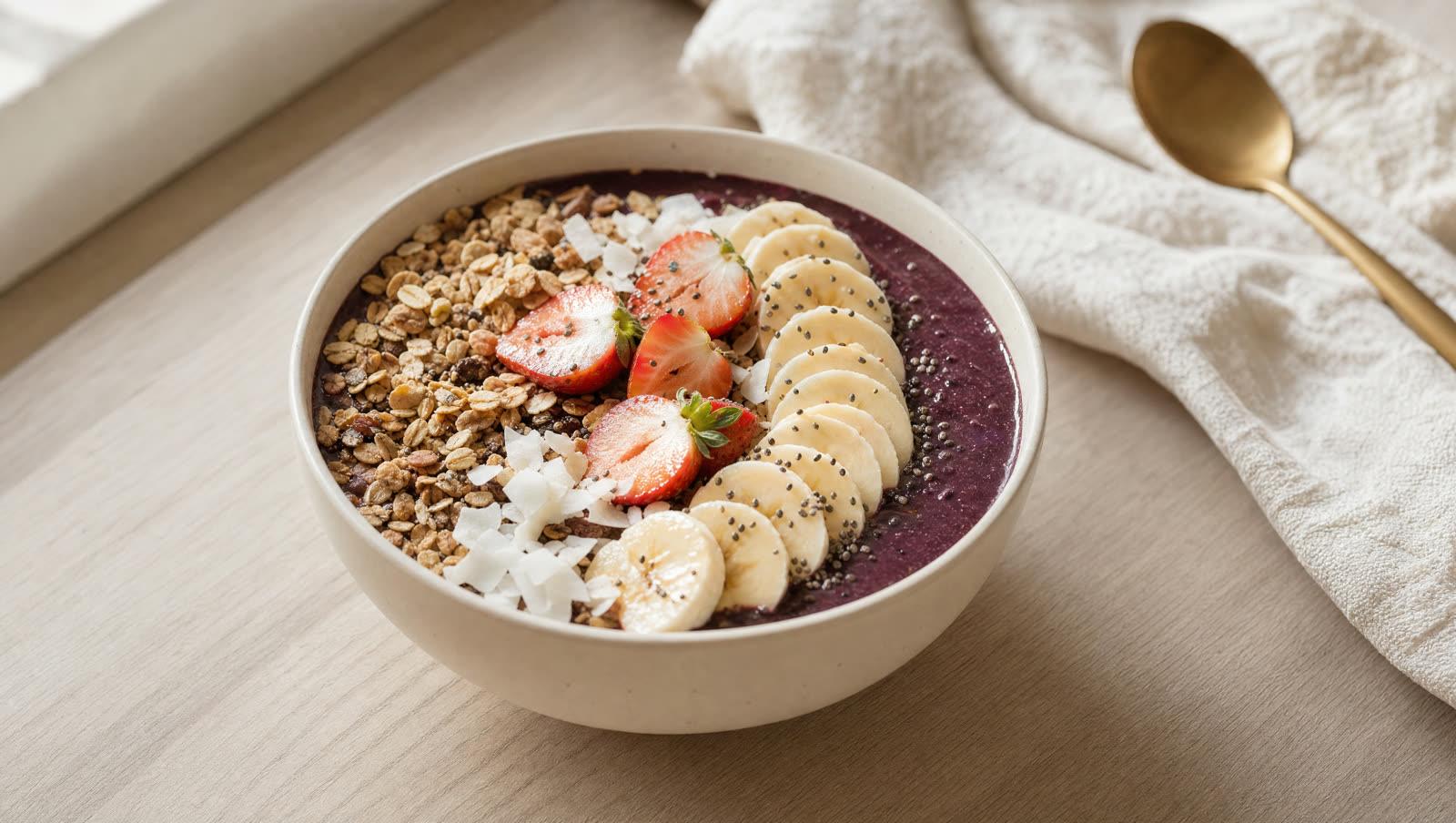
An açaí bowl is a thick, frozen fruit puree made from açaí pulp, blended until it is too dense to drink and served in a bowl under a layer of toppings: granola, sliced banana, strawberries, coconut flakes, cacao nibs, nut butter, honey. The base is the açaí berry, a small dark purple fruit that grows on palms in the Amazon. Everything else about the bowl, the sweetness, the calories, whether it lands as breakfast or as dessert, is decided by what gets blended into that base and piled on top of it.
What is açaí, exactly?
Açaí is the fruit of a palm tree native to the Amazon basin, mostly in Brazil, where it has been harvested and eaten for generations. The berries grow in heavy clusters and they are almost all pit. The edible part is a thin layer of pulp wrapped around one large seed, which is why you never see açaí sold whole in a supermarket the way you see blueberries. It has to be soaked, pulped and separated from the seed before anyone can do anything with it.
The fruit also spoils quickly once picked, so nearly all of it leaves the Amazon as frozen pulp or freeze-dried powder. That is not a shortcut or a downgrade, it is the only realistic way for açaí to reach a coffee shop in Miami at all. When you order a bowl, what goes into the blender is a frozen pack of pulp, not a basket of fresh berries.
On its own, açaí is not sweet. Unsweetened pulp tastes earthy and slightly bitter, somewhere between unsweetened cocoa and a dark berry, with a fatty, almost creamy texture that has more in common with avocado than with a strawberry. That flavor is the whole reason bowls are built the way they are. The banana, the honey and the granola exist to round it off.
Where did the açaí bowl come from?
There are two answers, and they are very different from each other. In the state of Pará in northern Brazil, açaí is an everyday staple rather than a wellness food. It is served as a thick, unsweetened puree and eaten savory, alongside fish, shrimp or manioc flour, much closer to a side dish than to a dessert.
The sweet bowl that Miami knows is a newer, southern invention. It took hold in Rio de Janeiro, where açaí blended with banana and guaraná syrup became fuel for beach and gym culture, and from there it traveled with surfers to Hawaii and California. Miami, with its large Brazilian community and its year-round appetite for something cold at breakfast, was an obvious next stop. If you want to see how far that spread has gone locally, our roundup of the best açaí bowls in Miami is a decent map of the city.
Are açaí bowls healthy?
Honest answer: it depends on the bowl, and the distance between one bowl and another is enormous. Açaí pulp on its own is a fruit. It has fiber, it has fat, and it carries the deep purple anthocyanin pigments found in other dark fruits like blueberries and blackberries. It is a perfectly reasonable thing to eat. It is not a cure, it does not detox anything, and it does not burn fat, no matter how a menu is written.
What actually moves the needle is two decisions, and neither of them is the açaí itself.
1. Sweetened or unsweetened pulp
Açaí arrives in most kitchens in frozen packs, and those packs come in both versions. Sweetened pulp already contains added sugar before anything else touches the blender. Many shops then add fruit juice, agave or honey to make the base easier to blend and easier to like. None of that is visible in the finished bowl, which is exactly why the question is worth asking out loud.
2. The toppings
This is where a fruit bowl quietly turns into a dessert. Granola is usually sweetened. Nut butter drizzles are generous. Honey goes on last and goes on fast. Add a large portion size and a bowl sold as a light breakfast can carry more sugar than a pastry. That is not an argument against açaí bowls. It is an argument for knowing what is in yours.
A bowl built on unsweetened pulp with fresh fruit, seeds and a modest handful of granola is a genuinely solid breakfast. A bowl the size of your head, built on sweetened pulp with three sugary toppings, is a treat. Both are fine. They are just not the same food, and treating them as the same thing is how açaí ended up with such a confusing reputation.
What is actually in a typical açaí bowl?
- The base: frozen açaí pulp, usually blended with a splash of liquid and often with banana for body and sweetness.
- The texture: thick enough to hold a spoon upright when it comes out of the kitchen. It softens fast at room temperature, which is why a bowl is meant to be eaten right away rather than carried around for an hour.
- The toppings: granola, banana, strawberry, blueberry, coconut, cacao nibs, chia, hemp or pumpkin seeds, nut butter, honey.
Everything past the base is a choice. If you want the bowl to hold you until lunch, the useful additions are the ones carrying protein and fat: seeds, nuts, nut butter. If you want it lighter, more fresh fruit and less granola gets you there without much effort.
Açaí bowl or smoothie: which one should you order?
They start from the same fruit and end up doing different jobs. A smoothie is thinner, you drink it, and it tends to disappear in a few minutes. A bowl is thicker, you eat it with a spoon, and the toppings give it texture and chew, which is a large part of why it registers as a meal instead of a drink.
If you are sitting at a table, the bowl usually wins. If you are walking to a desk or a meeting, a smoothie travels better and does not melt on you. Both are made from the same pulp, so the sugar question applies to both equally.
Açaí bowl versus pitaya bowl
Pitaya, or dragon fruit, is the bright magenta base you see sitting next to açaí on a lot of menus. It is a different fruit with a lighter, sweeter, more floral flavor and a looser texture. Açaí is darker, earthier and denser. If you have tried açaí and found it too earthy, pitaya is the usual next step. If you found it too sweet, go the other direction and ask whether the pulp can be unsweetened.
How do you keep a bowl from turning into soup?
Eat it fast, and eat it where it was made. An açaí bowl is served at roughly the texture of soft serve, and Miami weather is not kind to that. A few minutes in a hot car and the base separates from the toppings and turns into a purple puddle. If you have to take it to go, ask for the toppings on the side and add them at the other end. If you are staying, order it last rather than first.
Where to eat an açaí bowl in Coral Gables
Coral Gables is not short on options, and our neighborhood guide to the best açaí bowl near you in Coral Gables walks through them one by one. If you would rather build a whole slow morning around it than just grab a bowl and go, we also put together a piece on pairing matcha and açaí bowls for a Coral Gables wellness routine.
At GROU Coffee we serve the Super Açaí Bowl on the breakfast side of the menu, and Açaí Paradise on the smoothies and juices side if you would rather drink it than spoon it. We are at 4100 Salzedo St STE 5, Coral Gables, FL 33146, open Monday through Friday from 7:30 AM to 6 PM and weekends from 8:30 AM to 3 PM, with a 4.8 rating on Google across 1,095 reviews. It is a specialty coffee shop with an all-day brunch kitchen and a cowork space, so a bowl can be a five-minute stop or the opening move of a long morning. Questions before you come by: +1 (305) 639-8218.
Frequently asked questions
- What is an açaí bowl made of?
- An açaí bowl is made from frozen açaí pulp, blended thick with a splash of liquid and often with banana, then covered in toppings. The usual toppings are granola, sliced banana, strawberries, blueberries, coconut flakes, cacao nibs, chia or hemp seeds, nut butter and honey. The açaí itself is a small dark purple palm fruit from the Amazon that ships frozen because the pulp spoils fast once the fruit is picked.
- Are açaí bowls actually healthy?
- It depends on how the bowl is built. Açaí pulp is a fruit with fiber, fat and the purple anthocyanin pigments also found in blueberries and blackberries, but it is not a cure and it does not detox or burn anything. Two choices decide the outcome: whether the frozen pulp is sweetened or unsweetened, and how much granola, honey and nut butter lands on top. Unsweetened pulp with fresh fruit and seeds is a solid breakfast.
- What does açaí taste like?
- Unsweetened açaí tastes earthy and slightly bitter, somewhere between unsweetened cocoa and a dark berry, with almost no sweetness of its own. The texture is fatty and creamy, closer to avocado than to a strawberry. That is exactly why nearly every bowl adds banana, honey or granola. The sweetness you taste in an açaí bowl comes from the additions rather than from the fruit.
- Is an açaí bowl enough for breakfast?
- It can be, depending on what goes on it. A bowl of pulp, fruit and granola leans heavily on carbohydrate, which moves through you quickly and can leave you hungry again by mid-morning. Protein and fat are what hold it together: seeds, nuts, nut butter, or something like eggs or yogurt on the side. For a lighter version, load up on fresh fruit and go easy on granola and honey.
- What is the difference between an açaí bowl and a pitaya bowl?
- They are two different fruits used the same way. Açaí is dark purple, earthy, slightly bitter and dense, with a creamy texture that comes from its natural fat content. Pitaya, also sold as dragon fruit, is bright magenta, lighter, sweeter and more floral, with a looser texture. If açaí reads as too earthy for you, pitaya is usually right there on the same menu and is what most people switch to.
- Where can I get an açaí bowl in Coral Gables?
- GROU Coffee serves the Super Açaí Bowl on its breakfast menu and Açaí Paradise among its smoothies and juices, at 4100 Salzedo St STE 5, Coral Gables, FL 33146. It opens Monday through Friday from 7:30 AM to 6 PM and weekends from 8:30 AM to 3 PM, and holds a 4.8 rating on Google across 1,095 reviews. It is a specialty coffee shop with an all-day brunch kitchen and a cowork space.
Keep reading

The Best Coffee Shops in Wynwood, According to the Data
Twelve coffee shops in and around Wynwood, with the addresses, hours, Google ratings and price levels pulled straight from each listing. No invented opinions, just what you need to pick one and go.

What Are Tequeños? The Venezuelan Cheese Stick Miami Eats for Breakfast
A tequeño is a strip of wheat dough wrapped around salty white cheese and fried. Where the Venezuelan classic comes from, what cheese belongs inside, and why Miami eats it in the morning.
What Is a Chagaccino? The Chaga Coffee Drink, Explained
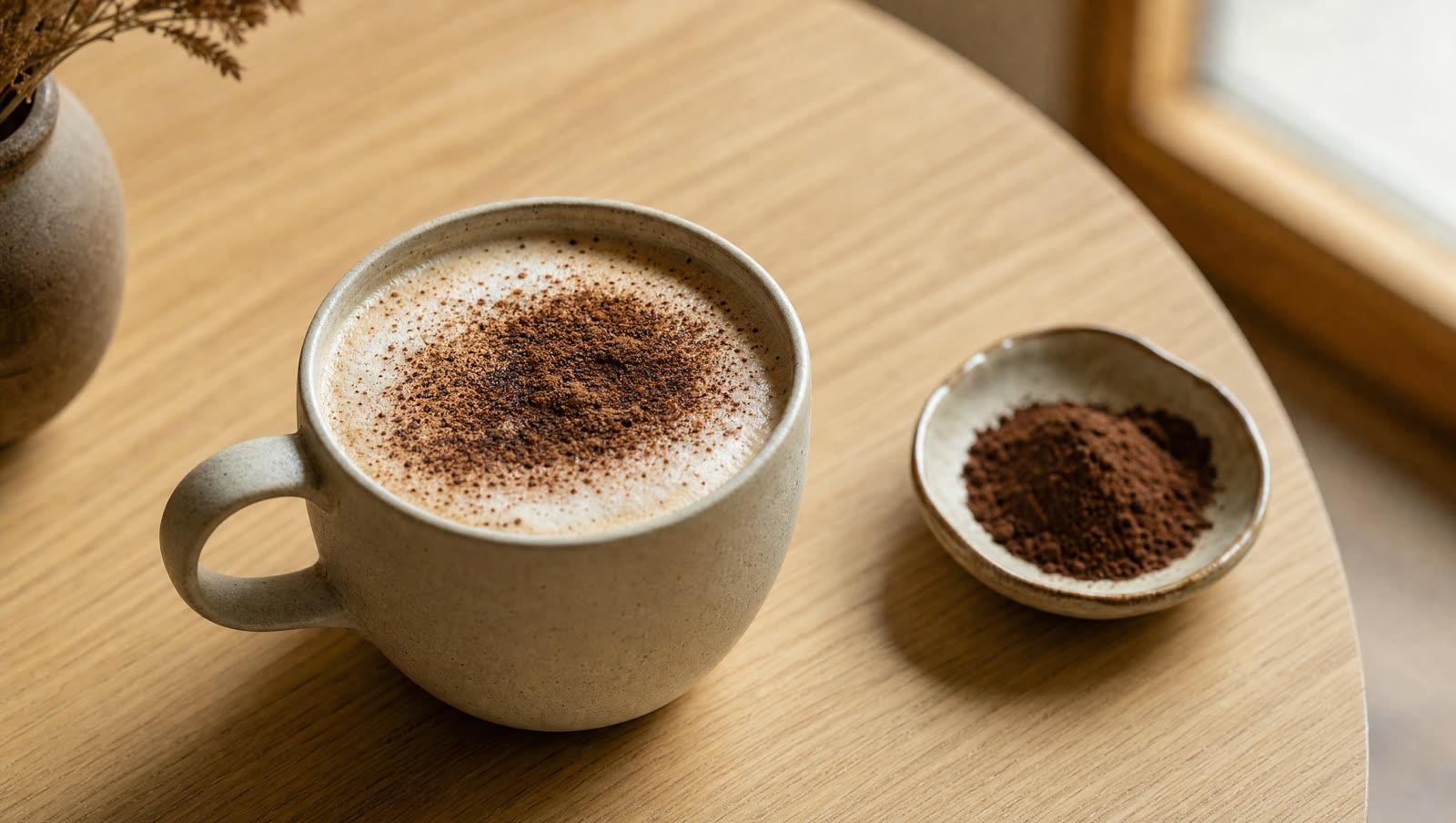
A chagaccino is a cappuccino made with chaga, a fungus that grows on birch trees, blended with cocoa and cinnamon. Here is what it tastes like, how much caffeine it has, and what nobody can honestly claim about it.