
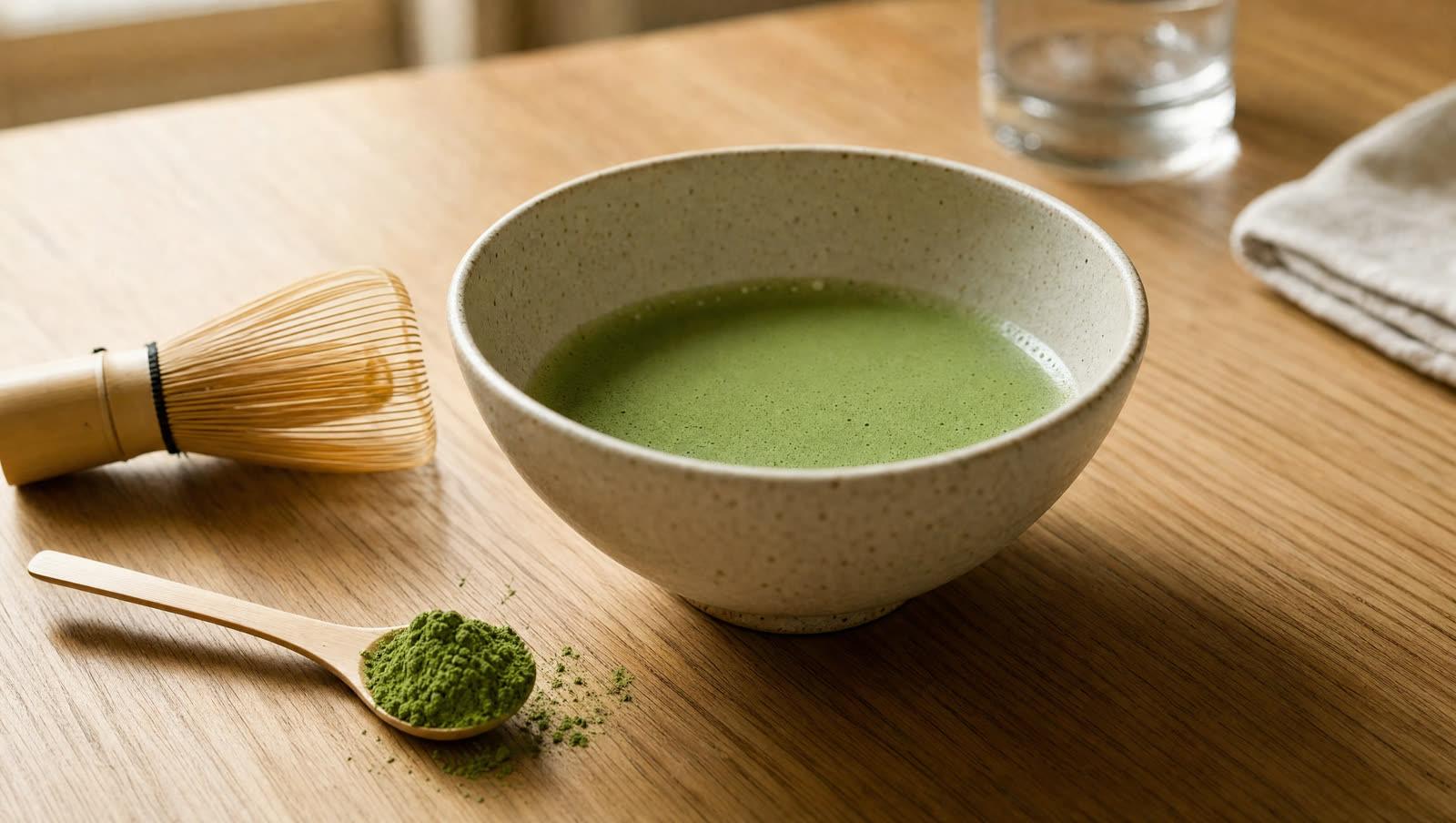
How Much Caffeine Is in Matcha? The Number, and How It Compares to Coffee
A standard matcha serving carries roughly 40 to 90 mg of caffeine, close to a single espresso shot and below a cup of drip coffee. Here is the full comparison, plus what actually changes the dose in your cup.
A standard serving of matcha, one teaspoon of powder whisked into water, carries roughly 60 to 70 mg of caffeine. Across brands and pours the honest range is wider, about 40 to 90 mg per cup, because you are drinking the whole ground leaf instead of an infusion of it. That puts a matcha in the same neighborhood as a single shot of espresso, usually cited near 63 mg, and a step below an 8 oz cup of drip coffee, usually cited near 95 mg. Matcha is not a caffeine-free swap. It is a coffee-sized dose in a different shape.
How much caffeine is in one serving of matcha?
Matcha powder is commonly cited at roughly 19 to 44 mg of caffeine per gram. That spread is why nobody can hand you one exact number without guessing, but it makes the math simple once you know how much powder went into the cup.
- 1 gram, about half a teaspoon: roughly 20 to 45 mg.
- 2 grams, about one teaspoon and the most common scoop behind a counter: roughly 40 to 90 mg.
- 4 grams, a thick ceremonial style preparation: roughly 75 to 175 mg.
Almost every matcha latte sold in a coffee shop is built on a single teaspoon scoop, so the practical answer for a drink someone hands you across a counter is 40 to 90 mg, and around 70 mg is a fair middle guess. A bar that uses two scoops doubles it. At home the risk is different: if you are heavy handed with the spoon you can quietly double your own dose without noticing, because matcha tastes greener, not stronger.
Matcha vs espresso: which one has more caffeine?
Per ounce, espresso wins without a contest. One shot packs around 63 mg into a single ounce of liquid, while a matcha spreads a similar amount across a cup of 8 to 12 oz. Per serving, though, the two land close. A single shot and a standard matcha are nearly a tie, and the moment a bar pulls a double shot, which is standard for a latte, coffee moves ahead at roughly 125 mg.
So the comparison that matters depends on what you actually order. A matcha latte almost always sits under a coffee latte made with two shots. A matcha built on a generous ceremonial scoop can pass a cortado pulled on a single shot. If you are switching to matcha because you want less caffeine, ask for one scoop and confirm it. If you are switching because you want a similar lift with a different taste, you are already there.
How does matcha compare to drip coffee, cold brew and green tea?
Here is the rough hierarchy, from most caffeine to least, using commonly cited averages rather than any single brand:
- Cold brew, 12 oz: often 150 to 200 mg or more, since it is made at a high coffee to water ratio.
- Espresso, double shot: around 125 mg.
- Drip coffee, 8 oz: around 95 mg, with a real range of about 70 to 140.
- Matcha, one teaspoon: roughly 40 to 90 mg.
- Espresso, single shot: around 63 mg.
- Black tea, 8 oz: around 47 mg.
- Steeped green tea, 8 oz: around 28 mg.
The gap between matcha and ordinary green tea is the interesting one. They come from the same plant, and matcha still tends to carry two or three times the caffeine. The reason is not a stronger leaf. When you steep, the water pulls out part of the caffeine and the leaf goes in the trash. With matcha the leaf is ground into powder and the whole thing goes down with the drink.
Why does matcha feel different from coffee if the caffeine is similar?
Caffeine is the same molecule either way, so the difference sits somewhere else. Two things usually get the credit. The first is L-theanine, an amino acid that shows up in high amounts in the shade-grown leaves used for matcha, and that drinkers widely associate with a more even lift than the espresso hit. Research on that pairing is still developing, so treat it as a very commonly reported experience rather than a promise.
The second is less romantic: volume and speed. An espresso is 1 oz you can finish in eight seconds. A matcha latte is 10 or 12 oz with milk in it that you stretch over twenty minutes. The same caffeine spread across a longer window simply feels flatter. Anyone who has knocked back a straight matcha on an empty stomach can tell you the calm is not magic.
Does a matcha latte have more caffeine than plain matcha?
No. Milk adds volume, sweetness and texture, not caffeine. All the caffeine in a matcha latte comes from the powder, so a 16 oz cup and an 8 oz cup built on the same scoop deliver the same dose. The big cup is more diluted, not stronger.
Same logic for iced versions and for lemonade style matcha. Ice, water and citrus change the flavor and how fast you finish the drink, but the caffeine count stays tied to the powder. If you want less caffeine, the only real lever is less matcha, not a smaller cup and not less milk.
What makes one matcha stronger than another?
Four factors move the number:
- How much powder. By far the biggest one, and the one nobody measures at home.
- The harvest. First harvest leaves and young buds generally carry more caffeine than late harvests, which is part of why ceremonial grade often tests higher than culinary grade.
- Shade growing. The weeks under shade that give matcha its color and its sweetness also tend to raise caffeine and L-theanine in the leaf.
- Preparation style. Usucha, the thin everyday whisk, uses about half the powder of koicha, the thick ceremonial style. Same tin, very different dose.
Water temperature is the one that fools people. With steeped tea, hotter water extracts more caffeine. With matcha you are swallowing the powder itself, so temperature mostly changes flavor and bitterness rather than the dose. Cooler water gives you a smoother cup, not a weaker one.
Will matcha keep you up at night?
It can, and later than most people calculate. Caffeine has a half-life commonly cited around five hours in healthy adults, with a real range of roughly four to six and a lot of variation between people. A 70 mg matcha at 4 PM still leaves you something like 35 mg at 9 PM, which is a third of a cup of coffee floating around at bedtime.
If you are caffeine sensitive, a single scoop matcha in the early afternoon lands softer than a double shot, though it is still caffeine. If you are pregnant, nursing, taking medication or managing a heart condition, that question belongs to your doctor rather than a blog.
How much caffeine per day is considered fine?
The FDA points to 400 mg a day as an amount not generally associated with negative effects in healthy adults. Translated into matcha that is roughly five or six standard servings, far more than anyone feels like whisking. The real caution is not the matcha by itself, it is the daily stack: a morning coffee, an afternoon matcha and a cold brew after lunch reach that number much faster than any of them alone.
One more note worth making. Because you swallow the leaf instead of steeping it, a matcha delivers more of what the leaf holds, caffeine included, than the same tea brewed and strained. That is the entire reason the numbers above sit so far above steeped green tea. If you are drinking several a day on top of coffee, the count that matters is the caffeine, not the color.
Where to find a matcha latte near you in Coral Gables
GROU Coffee is a specialty coffee shop with an all-day brunch kitchen and a cowork space at 4100 Salzedo St STE 5, Coral Gables, FL 33146, rated 4.8 on Google with 1,095 reviews. Matcha lives in the Tea & Matcha section of the menu, as a Matcha Latte and as an Iced Matcha Lemonade for the days when Miami makes the decision for you. Hours are 7:30 AM to 6 PM Monday through Friday and 8:30 AM to 3 PM on weekends, and the phone is +1 (305) 639-8218.
If you are working your way through the neighborhood, we wrote a longer guide to the best matcha in Coral Gables, and another on matcha and açaí bowls around Coral Gables for the days when the matcha is breakfast rather than the afternoon push.
Frequently asked questions
- How much caffeine is in a matcha latte?
- A matcha latte made with one teaspoon of powder carries roughly 40 to 90 mg of caffeine, with about 70 mg as a fair middle estimate. Milk does not change that number, since caffeine comes only from the matcha powder. A 16 oz latte and an 8 oz latte built on the same scoop deliver the same dose. The bigger cup is more diluted, not stronger.
- Does matcha have more caffeine than coffee?
- Usually not. A standard matcha serving lands around 40 to 90 mg of caffeine, a single espresso shot around 63 mg, and an 8 oz cup of drip coffee around 95 mg. Since most coffee lattes are built on a double shot near 125 mg, a matcha latte typically has less caffeine than the coffee version. Per ounce espresso is far more concentrated, but per serving the two sit close.
- Why does matcha feel calmer than coffee if the caffeine is similar?
- Tea leaves contain L-theanine, an amino acid found in high amounts in the shade-grown leaves used for matcha, and drinkers widely describe the combination with caffeine as a steadier lift than espresso. Research on that pairing is still developing, so it is a very commonly reported experience rather than a proven effect. Format matters too: an espresso is 1 oz finished in seconds, a matcha latte is 12 oz sipped over twenty minutes.
- Will an afternoon matcha keep me awake?
- It can. Caffeine has a half-life commonly cited around five hours in healthy adults, so a 70 mg matcha at 4 PM leaves roughly 35 mg in your system by 9 PM. Sensitivity varies a lot between people. If you sleep lightly, keep matcha before mid afternoon or ask for a single scoop. Anyone pregnant, nursing or taking medication should check limits with a doctor.
- How much matcha can I drink in a day?
- The FDA points to 400 mg of caffeine a day as an amount not generally associated with negative effects in healthy adults, which works out to roughly five or six standard matcha servings. Most people never come close with matcha alone. The real issue is stacking drinks: a morning coffee, an afternoon matcha and a cold brew add up faster than any single one suggests.
- Where can I get a matcha latte in Coral Gables?
- GROU Coffee serves matcha in Coral Gables at 4100 Salzedo St STE 5, Coral Gables, FL 33146, rated 4.8 on Google with 1,095 reviews. The Tea & Matcha section of the menu includes a Matcha Latte and an Iced Matcha Lemonade. Hours are 7:30 AM to 6 PM Monday through Friday and 8:30 AM to 3 PM on weekends. The phone is +1 (305) 639-8218.
Keep reading
The Best Coffee Shops in Wynwood, According to the Data
Twelve coffee shops in and around Wynwood, with the addresses, hours, Google ratings and price levels pulled straight from each listing. No invented opinions, just what you need to pick one and go.
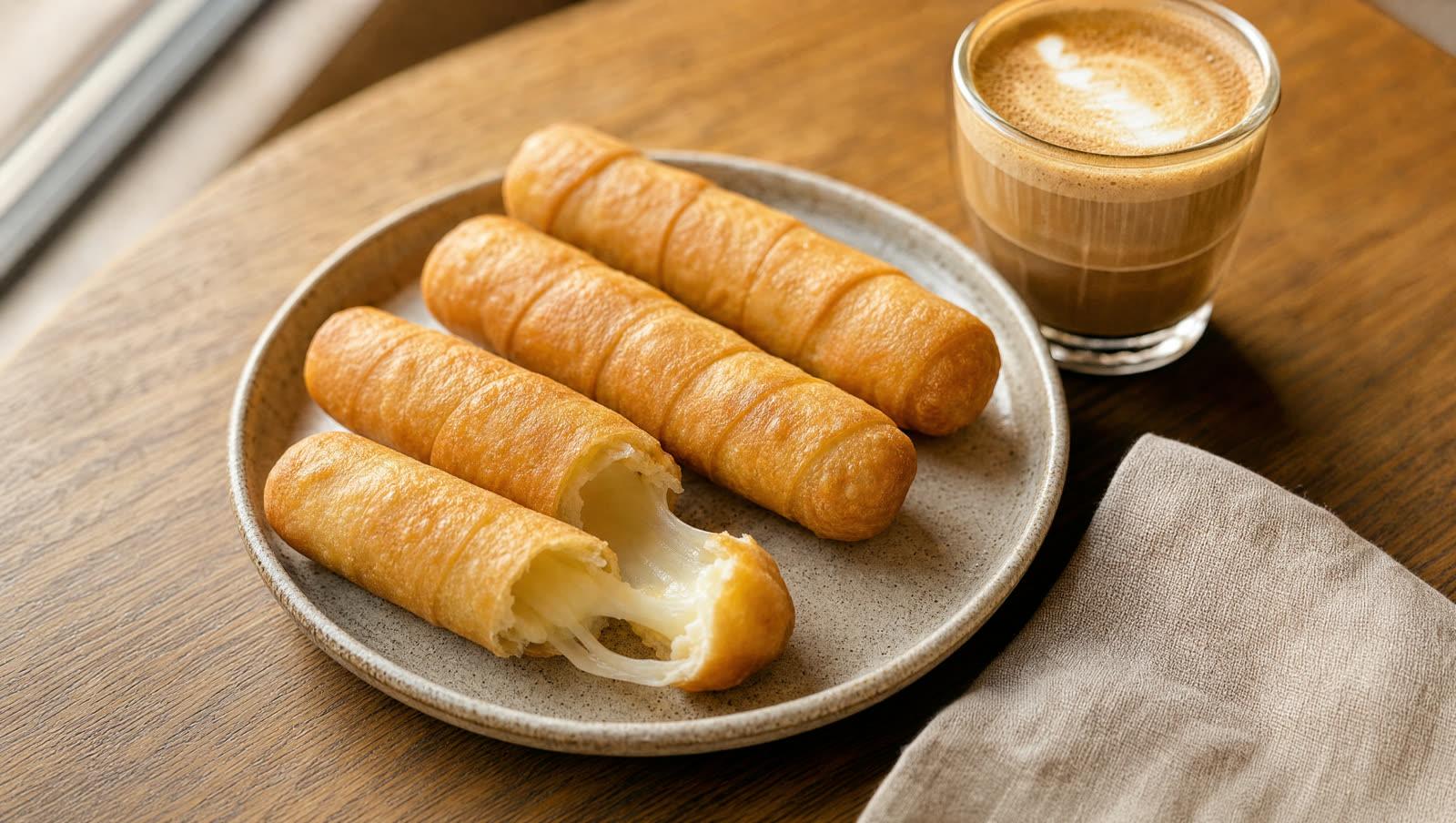
What Are Tequeños? The Venezuelan Cheese Stick Miami Eats for Breakfast
A tequeño is a strip of wheat dough wrapped around salty white cheese and fried. Where the Venezuelan classic comes from, what cheese belongs inside, and why Miami eats it in the morning.
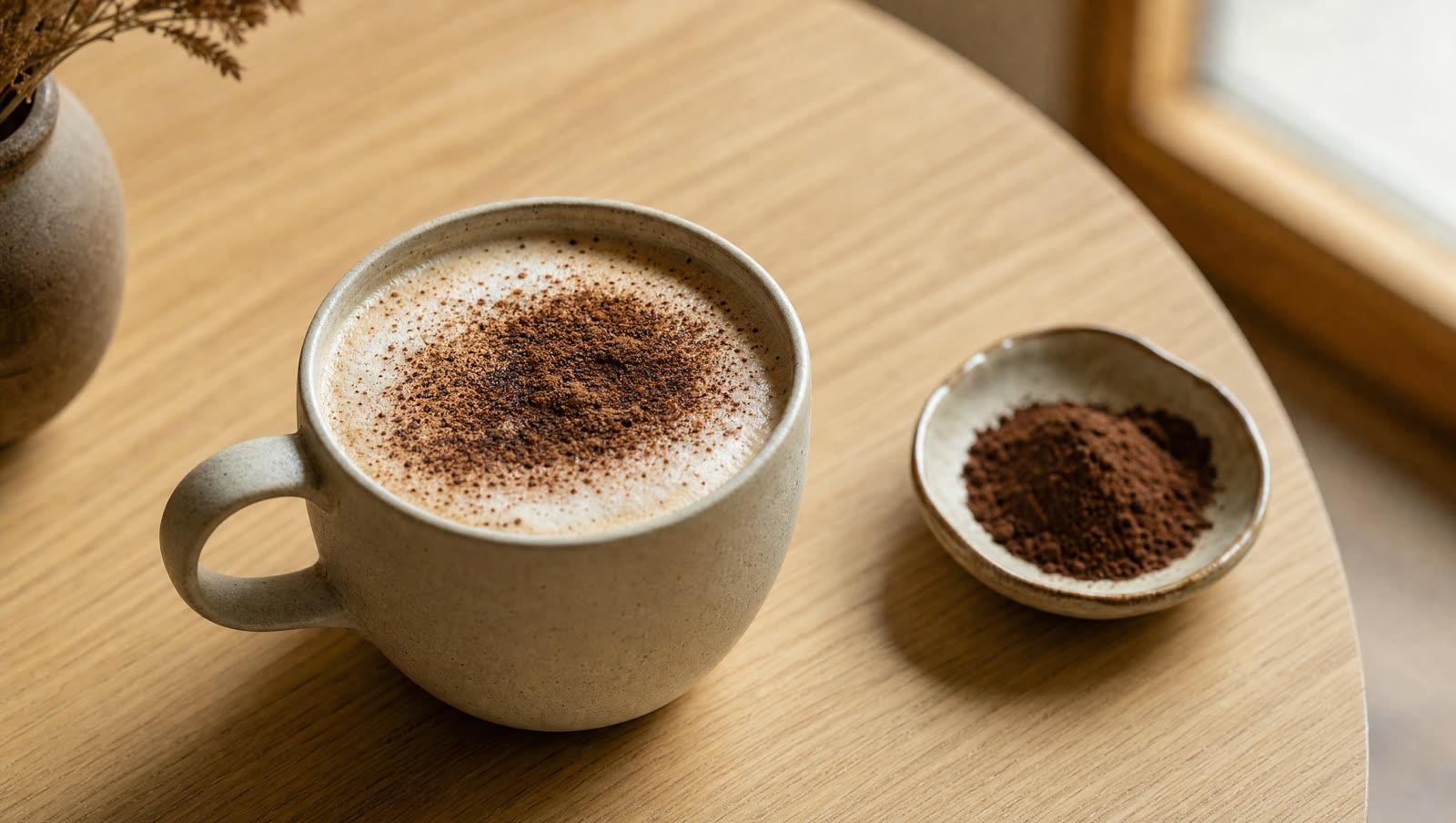
What Is a Chagaccino? The Chaga Coffee Drink, Explained
A chagaccino is a cappuccino made with chaga, a fungus that grows on birch trees, blended with cocoa and cinnamon. Here is what it tastes like, how much caffeine it has, and what nobody can honestly claim about it.